
Spanish Nougat Explained: Turrón de Jijona vs Turrón de Alicante

When the Winter arrives and the weather starts turning cold, Christmas lights start populating the cities and Spanish grocery stores start selling turrón (nougat). Hard nougat, soft nougat, egg yolk nougat, chocolate nougat, … you name it!
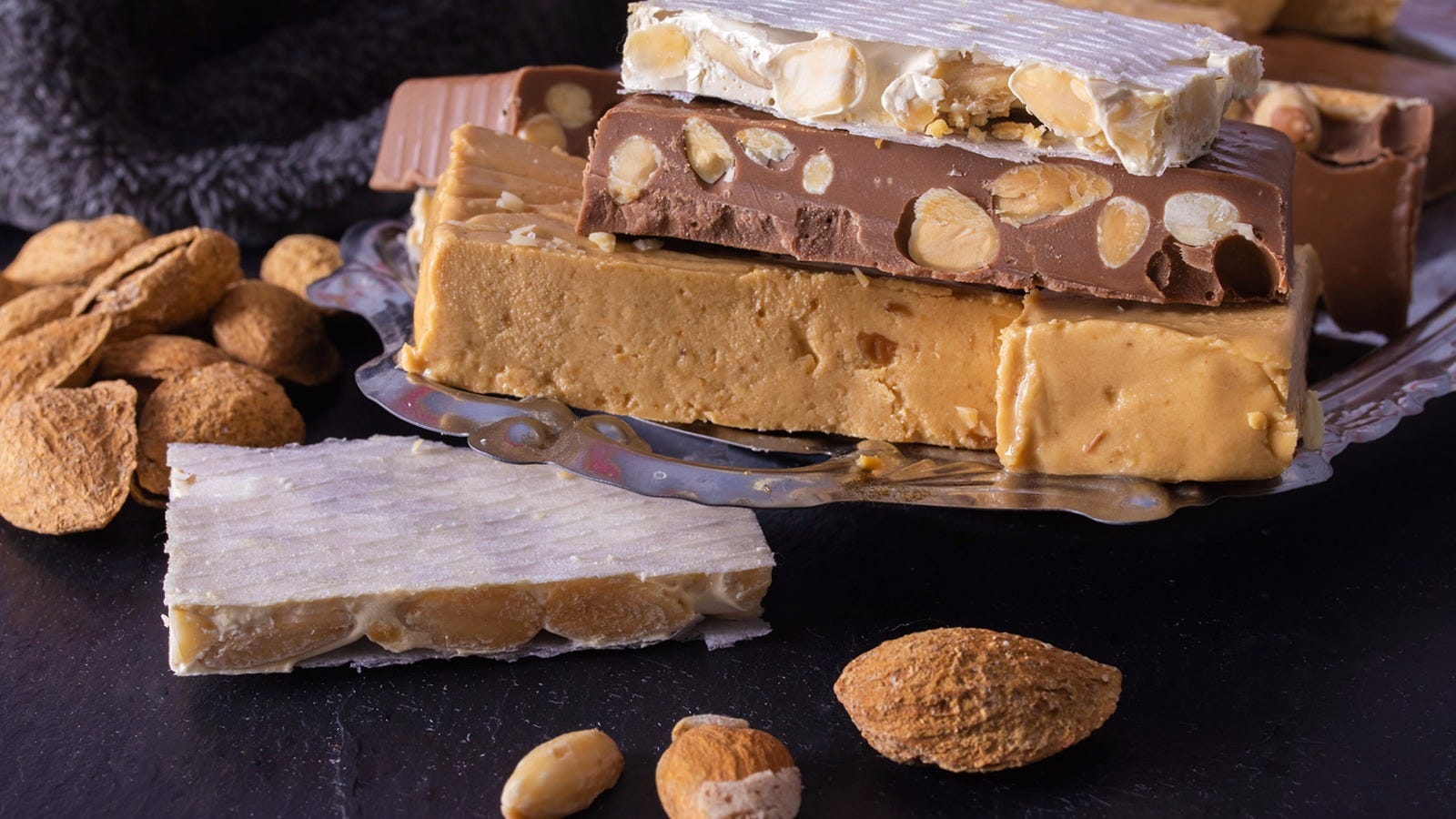
What’s up with the nougat in Spain?
Many European countries have their own nougat, which often reflects the local ingredients that were available before globalisation for making these sweets. And many of these nougats are quite different. So is the case of the Spanish one, which has many varieties that are unique to Spain: duro (hard), blando (soft), de yema (egg yolk), etc…
The most popular nougat types in Spain —those you likely know— are hard and soft nougat. Toasted egg yolk nougat is also very popular.
More on them explained two sections below.
The most popular Spanish nougat comes from a little town in the region of Alicante, called Jijona. If you’ve ever bought turrón in Spain around Christmas time, you likely have seen the name Jijona in the store or in the packaging. And I don’t mean buying turrón in Vicens — which by the way stemmed across every major Spanish city in recent years. I had never heard the name before their stores started invading Madrid with people offering free nougat to pedestrians.
The origin of turrón (nougat)
The most plausible explanation of nougat’s ancient origin is that in the Ancient Mediterranean, people used to mix honey and nuts to create a highly calorific and long-lasting food. Some say that it was introduced to Spain during the Muslim rule quite a few centuries ago. However there’s nothing related to Jijona here.
How did Jijona become Spain’s nougat powerhouse?
In the 1600s there was rivalry among multiple guilds in Spain over the use of sugar for making sweets. Alicante had been making a very successful nougat, and the sales were increasing. The guild of confectioners from Valencia felt threatened, and a trial took place to regulate the use of sugar. The result was that Alicante’s nougat industry was banned, in favour for Valencia’s sweets.

The industry from Alicante was then shifted to a small town that went unnoticed, called Jijona. The production was quite limited, until the sugar-usage restrictions were removed. This was a tipping point for Jijona, as they had absorbed Alicante’s industry during the ban, and now they could unrestrictedly manufacture and sell as much nougat as demanded by the market.
The invention of Turrón de Jijona
As demand increased, manufacturers in Jijona started running out of supplies. They were selling so much nougat that they couldn’t keep up with the need for almonds and honey that was needed. So they had an idea.
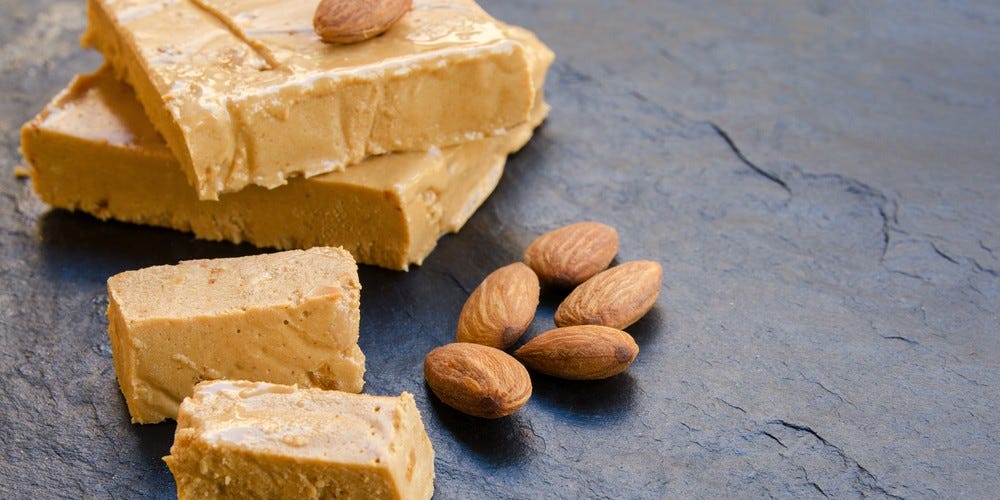
“What if we add another ingredient, so that we don’t rely so much on honey and almonds?” — someone must have said, with the very interesting voice I can guess from a Spanish master nougat-maker.
Some sugar was introduced to the mix, creating a different nougat than the one before: turrón blando. This one had a softer texture, and smoother taste.
Turrón Blando (soft) vs. Turrón Duro (hard)
As mentioned above, there are multiple types of turrón (nougat) in Spain. Turrón Duro (also called Turrón de Alicante) is the original nougat from Alicante, manufactured purely with almonds and honey. On the other hand, Turrón Blando (also called Turrón de Jijona) is the altered version created to catch up with the growing demand for turrón, in which sugar was added to the mix to reduce the need for almonds and honey. This version was created in Jijona, and is therefore also called Turrón de Jijona.
As you can see in this turrón from the brand 1880, they’re selling the 15th Century recipe Turrón Duro / de Alicante. It’s made with 68% almond, 31% pure Spanish honey, and 1% egg white. And that’s it. Have you seen many sweets with such an ingredient list?

Regarding the Turrón Blando / de Jijona, in the video below you can see how the brand La Colmena makes it. Their ingredient list is also surprising in the sweet industry, only using 70% almonds, 17% honey, sugar and egg white. Look at the elaboration process here:
Toasted Egg Yolk Turrón
This famous variety of turrón stems from a confectioner from Barcelona. Mixing egg yolks and sugar to make a sweet paste is a traditional technique in Spain, as we saw in the previous episode. It’s used for the filling of the Saint’s Bones. However it was also used to make some sort of sweet bar —turrón de yema— as a way to use the leftover egg yolks that remained after using the egg whites for the other types of turrón explained above.

One confectioner from Barcelona was making turrón de yema to use the leftover egg yolks he had from the turrón blando and turrón duro, but it came out too wet and mushy. Inspired by crema catalana, he decided to “burn” the surface of the turrón de yema so it became more sturdy. The result was the famous toasted version of turrón de yema, much more tasty and with that “burnt” taste that makes it unique.