
Are Vicens stores Tourist Traps? ❌⁉️
Are they worth your money?

Vicens has many stores all across Spain, which tourists perceive as traditional and then buy overpriced nougat bars and chocolate by the dozen. But… how traditional can the production be to deliver such immense supply?
Here’s my honest opinion as a Spaniard:
If you’ve visited any major city in Spain in recent years, it’s very likely that you’ve walked into one of the Vicens stores. They’re those fancy all white shops with people giving free nougat samples to the pedestrians.
But… are they tourist traps?
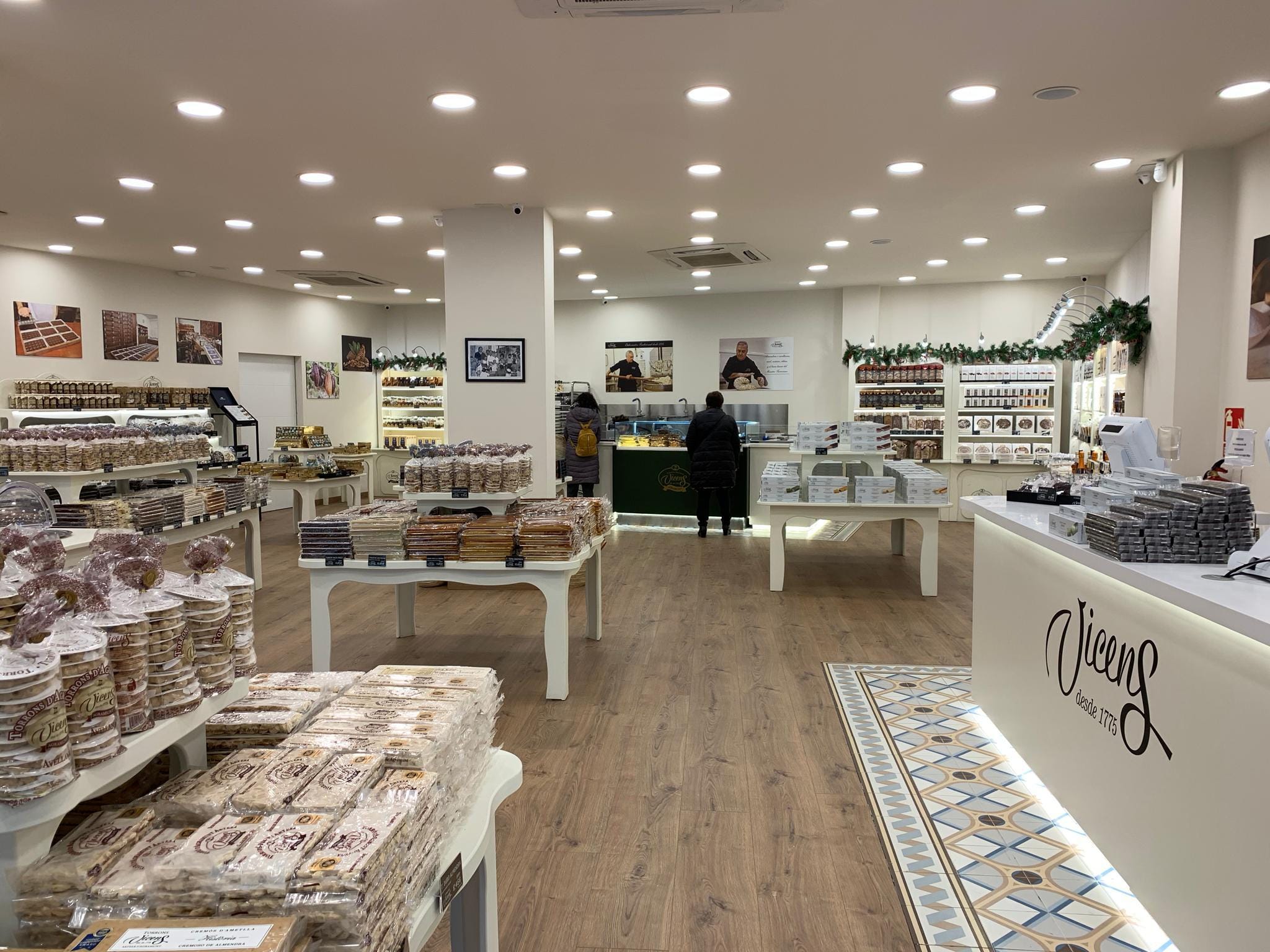
It’s a difficult question, because they sell good products in a touristy (and overpriced) way.
I’ll break it down:
Vicens is a brand with a long tradition. They claim it to be “Since 1775”. However, the fact that it started then doesn’t mean it’s been such a popular brand traditionally in Spain as one would imagine seeing their current presence.
In other words: When you see their fancy stores in every corner of Madrid, in airports, or in any other high street of a major Spanish city, you would think that their stores have been there for decades.
And that’s really not the case. In fact, I hadn’t heard about the brand until a few years ago when I started bumping into their stores everywhere.
Taking Cities by Storm
The context:
I’ll explain soon what this has to do with Vicens Nougat
I think one of the main reasons why Spanish products have traditionally not been as regarded abroad as French or Italian is the marketing. Spain produces some of the finest gastronomic products in the world. And now they are achieving a “better” perception abroad than some decades ago. But usually not as regarded by the mass as Italian and French products, which traditionally were on the fancier end abroad.
If we look at the facts, we can see how Spain produces practically half of the world’s olive oil. With regions like Jaén producing alone more olive oil than all of Italy combined. Yet Italian oil is often more regarded, even with brands placing an Italian name on a blend of oils from other EU countries such as Spain or Greece. This is done because the Italian branding sells more abroad.
You may be thinking now that the oil from Spain is not as good. The reality is that Spain has been producing olive oil since the Roman Empire, with centuries-old olive trees that produce world-class olive oil.
In fact, there is a sort of “mountain” in Rome formed by the accumulation of the vases in which olive oil from Hispania (Roman Spain) was imported. You can only imagine the scale of the Spanish olive oil production.
The reason why Spain’s brand is not as strong is something that I don’t fully understand but I will research for another article.
What Vicens got right
After understanding this “lack-of-branding” of Spanish products, it’s easier to understand why the nougat brands from Spain that were traditionally more popular, never took the cities by storm as Vicens did.
I recently saw some of them, such as 1880, following Vicens’ lead and tactics to get some momentum. High-street stores with a craft-looking / high-end-pastry-shop decor; staff giving free samples to pedestrians, better packaging, etc…
An experience tailored to successfully communicate why that product is traditional, and why they’re the best option for someone who wants to buy it. If you think about it, people want to take home something that feels authentic, but also cool.
If you bought some really artisanal nougat but the packaging is off, that’s not something you want to take back home as a gift for your friends and family. But people still want to buy something authentic.
That’s why the blend of marketing, packaging and tradition pays off so well to brands like Vicens.
Taking Spanish Consumers
Vicens also took a big share of Spain’s domestic market. They positioned the brand as a high-end option, with mass-appeal elements such as collaborations with famous chefs or brands.
Authenticity
In my opinion, when a “traditional” brand is selling collaborations with worldwide brands like Baileys or Chupa Chups; or new flavours such as “Dubai chocolate nougat”, their traditional positioning is diluted.
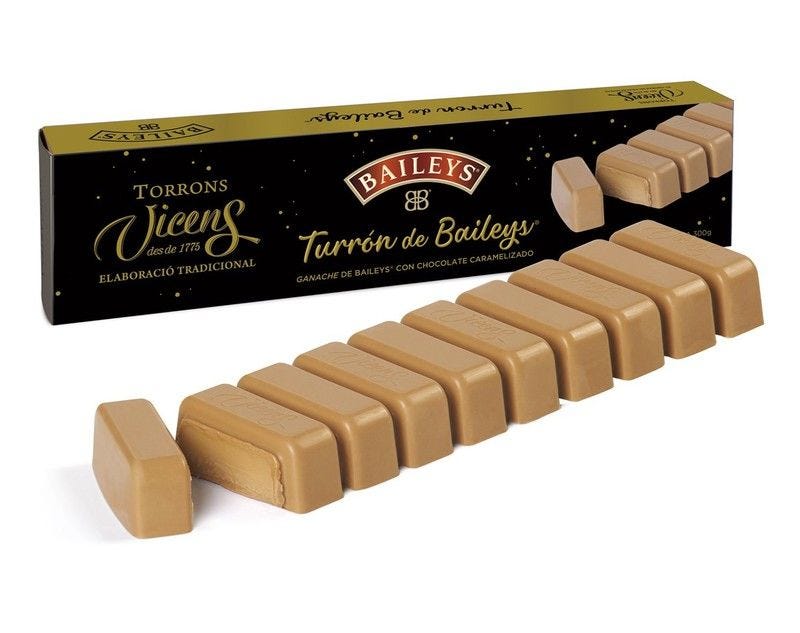
You can’t sell me heritage if you sell Dubai chocolate flavour. Because heritage is also present in the business approach. And if a company is so profit-maxing oriented, it makes me reluctant to believe that they’re keeping their production processes so traditional and old fashioned.
As we said, Vicens has many stores all across Spain, which tourists perceive as traditional, and buy nougat bars by the dozen. But… how traditional can the production be to deliver such immense supply?
I also can’t imagine some traditional nougat artisans in Spain making Dubai chocolate nougat. This is something I would expect from a big corporation —which is what Vicens is—, not from a traditional artisanal brand.
I’d love to know what you would like to know about Spanish Gastronomy.
Let me know in the comments so I can write about it :)
Should you buy from Vicens?
Absolutely. As I mentioned above, they figured out a formula to sell a traditional Spanish product in a way that is well-packaged, well-marketed, and attractive.
This means that you’re paying a higher price than you could, but you’re getting a product that also feels cool, which is what most tourists are after. And it also looks cool as a gift to bring home, so definitely Vicens is a good place to buy some nice Spanish nougat to bring back home so your people can also try it.
However, I would recommend buying the traditional nougat so you get something the most authentic possible. If you buy the “viral” flavours, you will be just buying a mass-appeal product rather than a piece of Spain’s gastronomic tradition.
In this article I wrote you can read more about the types of nougat that are the most traditional in Spain: