
2-Ingredient Basque Curd Sheep's Milk Dessert Recipe (Delicious)
Besides the world-famous Basque Cheesecake, there are other delicious Basque desserts, like the one I will show you today!

Growing up in the Basque Country, there are many gastronomic adventures that one doesn’t appreciate enough until spending some time abroad. Basque cheesecake is one of them. I have to say that even though Basque cheesecake is famous abroad, the ones I’ve tried in other countries are far from the original, as people tend to include vanilla or a biscuit base, and neither of them are in the real recipe.
But today I’m bringing a different dessert. It’s probably the easiest dessert recipe I know. And the result is a delicious dairy treat that is impossible to find abroad. Unlike Basque cheesecake, this one is a local delicacy that you will only find in Northern Spain. I’m of course talking about cuajada!
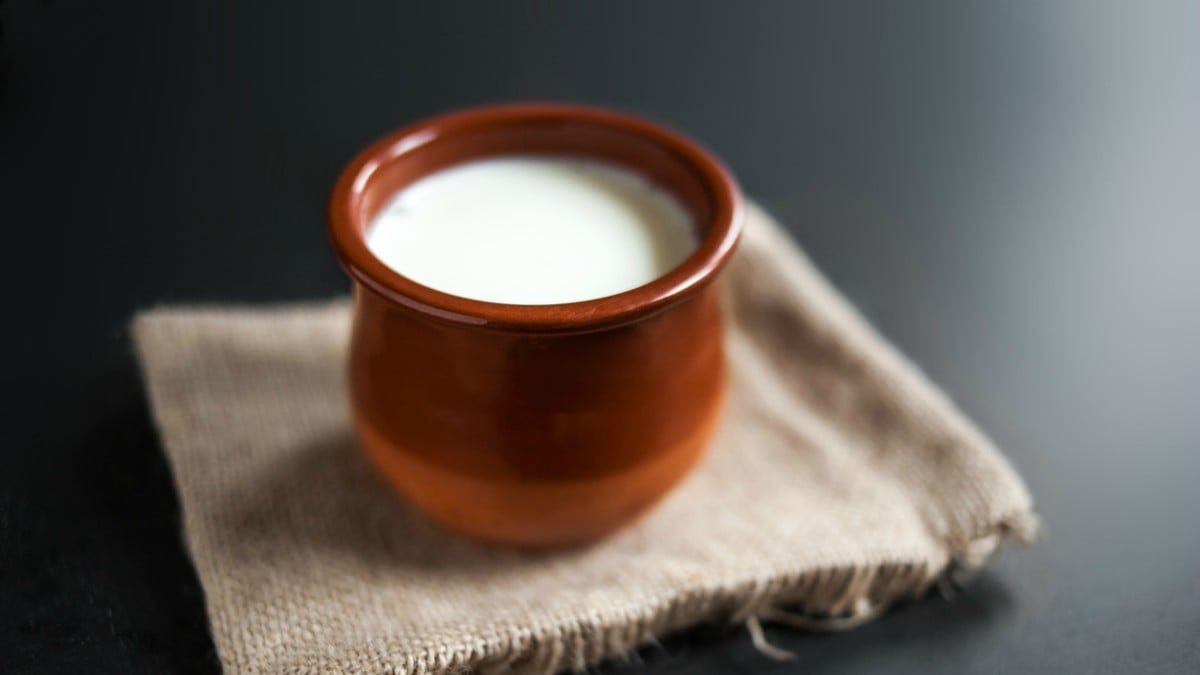
What is Cuajada?
Cuajada means curd in English. So as you can imagine, this dessert is basically curd sheep’s milk. This is very typical in the Basque Country and Navarre, and it’s absolutely delicious. It takes 10 minutes to prepare, and once you try it, it will become an instant favourite.
Origins of Cuajada
In the Basque Country and Navarre, there is a lot of sheep herding. The most traditional cheese of the region is the Idiazabal, which is made with sheep’s milk as well. There is a local sheep species called Latxa in this region, and its milk must be used for elaborating Idiazabal cheese. Otherwise it can’t be labelled as so. But we’ll talk about this cheese in another occasion, let’s come back to cuajada.
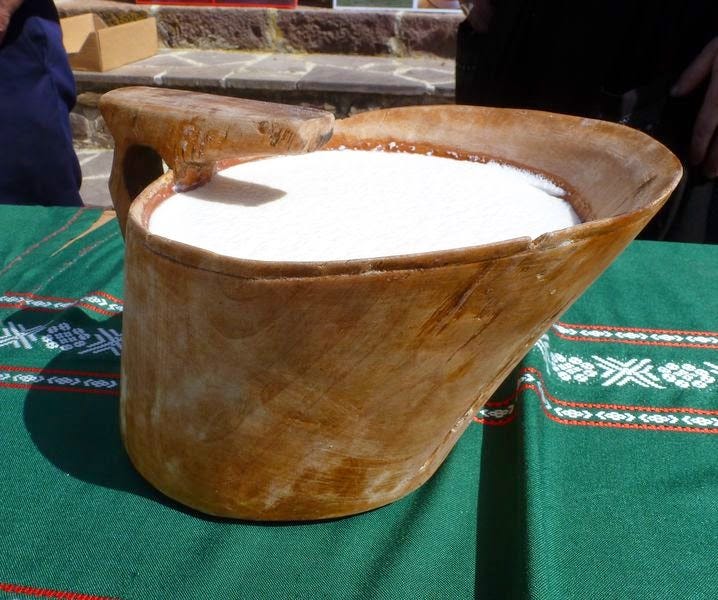
Cuajada, also called mamia in Basque, is a very traditional dessert. There is a traditional tool for making it (which we will replace by a pot for our recipe), and a traditional process for heating the milk. Let me break it down:
Originally, there was a wooden recipient called Kaiku, in which the sheep’s milk was contained. Then, a stone was heated on a fire until it reached a high temperature, and placed inside the milk. This way, it heated the milk while partially burning it by the temperature shock, which added a stone-burnt flavour to cuajada that made it absolutely delicious. Nowadays most people just use a regular metallic pot, and heat the milk on the hob.
How to eat it
Cuajada is eaten like a yoghurt. It’s very typical to add raw honey to it. I once tried adding some organic maple syrup I found in the supermarket, as a sort of experiment, and it worked surprisingly well. If you don’t have a nice quality honey at home, you can use the maple syrup instead. In Spain maple syrup is not a thing, everyone only uses honey for cuajada.
What ingredients do we need?
For making cuajada at home, we basically need two ingredients:
Sheep’s milk
Curdling agent
It’s very easy to find these in the supermarket in Bilbao, as there is a company from Navarre that distributes both to supermarkets with the intention of people making cuajada at home. I don’t know how easy it will be to find the ingredients abroad, but hopefully it’s something that most of you can manage to find!
I included some alternatives at the end of the article that may help you.
Recipe
Alternatives
For the milk
If you can’t find sheep’s milk, you can just use cow’s milk, although it will have a different flavour and texture. You will get an idea of how it looks / feels. It’s also tasty, but it’s really not the same dessert at all.
For the curdling agent
I don’t know how easy it is to find the curdling agent abroad. Maybe it’s very easy or maybe it’s impossible. If you’re living in Spain, you will probably find it in Eroski. If you live abroad, maybe it’s easier to use the lemon or vinegar. I have to say I never tried it this way as I always found the curdling agent, but I read online that it also works.
Pro Tip
If you really want to try the authentic flavour of cuajada, you could heat the milk with fire-hot stones. Simply heat some clean stones in a fire and then use them to warm the milk in the pot instead of using the hob. I tried warming some stones in the oven as I don’t have a BBQ / fireplace, but the stones didn’t reach the necessary temperature for it. It still warmed the milk a bit and added a bit of the desired burnt flavour so it was a nice attempt. I’m sure many of the people reading this have access to a fireplace or BBQ so you could try it this way if you’re really into traditional cooking.
Did you like it?
Let me know if you enjoyed this recipe! I bet many of you had never heard about it :)
This sounds both comforting and delicious, Miguel. I never heard of Cuajada!
Oh this sounds wonderful! I’m not big on heavy desserts and often enjoy fresh berries, yogurt and honey. This would hit the spot with an addition of seasonal fruit.